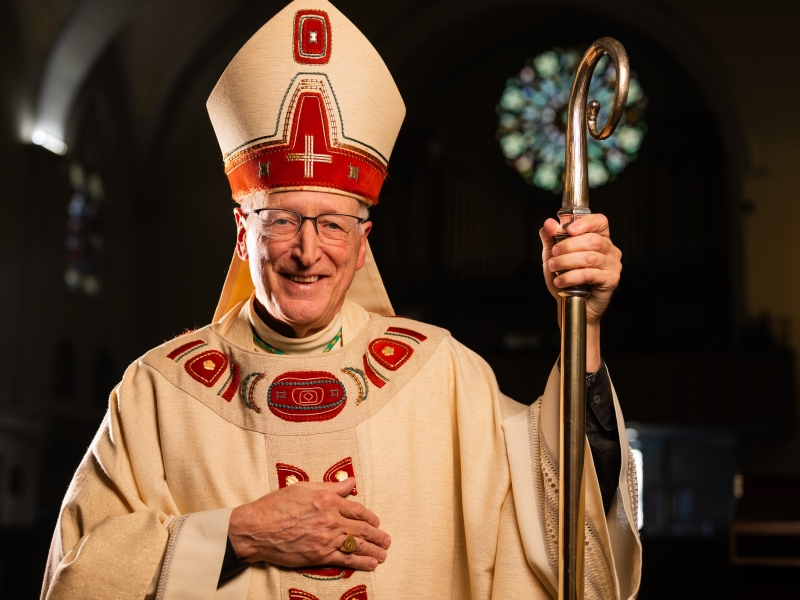
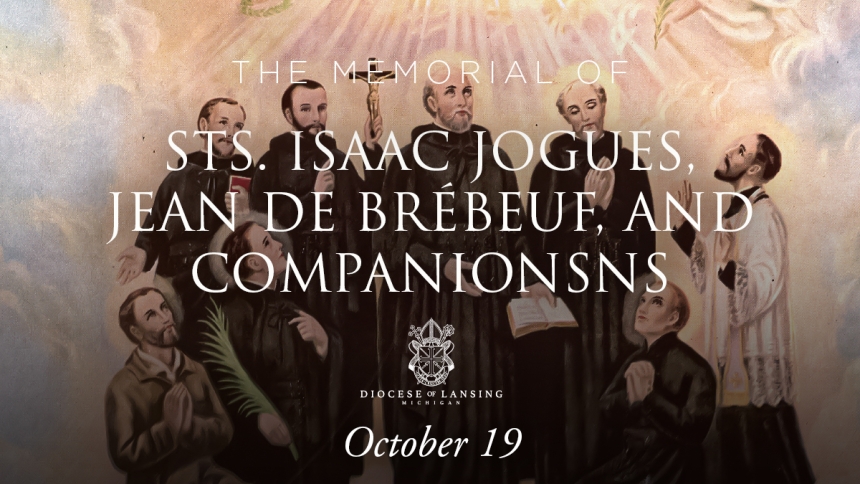
While the Jesuit priest, Isaac Jogues was killed by the Iroquois near present-day Albany, New York, on October 18, 1646, it is the story of his brother Jesuit, Jean de Brebeuf, which interests me more, writes Bishop Earl Boyea of Lansing.
Every few years, we take our seminarians on pilgrimage to Midland, Ontario, to the site where Jesuits in the mid-1600s welcomed native Hurons into the Church. The first Jesuit mission to the Hurons in present-day Canada, 1626-1629, was interrupted by English settlers from the south. The Jesuits’ second mission from 1632 to 1649 was one of the most successful evangelizing efforts by the Church.
These French Jesuits sought to live with and like their communities. They learned the local languages and tried to find similarities between Christianity and the local customs. One Jesuit wrote: “In winter we are careful to have fireplaces full of burning coals in several parts of the chapel, to provide against the discomforts that might arise from the cold and their nakedness. This so pleases them that some often remain, of their own free will whole hours after the service, to converse about our mysteries, and to become better and better instructed.”
The Jesuit missionaries recorded their activities in letters and annual reports back to France, mostly to stimulate support for the missions and to recruit more missionaries. These reports became known as the Jesuit Relations (1632-1673). They record the many trying years of missionary work finally reaching some real success and acceptance by the Huron in about 1644.
Brébeuf’s 1635 Relation is a masterpiece of the situation in Huronia. This priest became a master of their language teaching it to his French colleagues. It was often the sick, no doubt affected by European diseases, who were the objects of the Jesuit kindness, preaching and baptism. “On the 27th of November [1634], Martin Tsicok, already a very old man of a very kindly disposition, was baptized. This good man continually called upon Jesus and Mary from his baptism to his death on the 15th of December.” The recipients chose heaven over hell at the urging of the missionaries.
Father Jean de Brébeuf served there from 1626 to his martyrdom in 1649. In that year, on March 16, the Iroquois attacked the mission of Ste. Marie. The first Iroquois attack in 1648 saw Fr. Antoine Daniel martyred but it was in the next year that the Huron villages were destroyed. This attack against the Huron people, of whom about 15% were converts to the faith, destroyed the Huron missions. These Iroquois also herded Brébeuf and his companions, including Gabriel Lalemont, along a path, which our seminarians and I then follow, to his gruesome torture and death. I very much enjoy taking our seminarians up to those mission sites to pray for the guidance of Fr. de Brebeuf in our own formation as priests.
Father Paul Ragueneau wrote of the martyrs after visiting the sites, seeing the bodies, and talking to witnesses. Ragueneau’s 1650 Relation recorded the deaths of the Jesuits at the hands of the Iroquois based on witness accounts. Stripped naked, they were beaten, finger nails torn from their hands, while Brébeuf continually preached till his tongue was cut. He was baptized with hot water, was made to wear a collar of hot hatchets, with resin set his body afire, and stripped his flesh. Due to his bravery, the torturers dug out his heart and drank his courageous blood. The next day Ragueneau went to the site and viewed the two bodies, finding verification of the tortures inflicted on the men.
As a result of this attack, the Hurons were dispersed, some eventually settling into our own state of Michigan, where their Christian heritage is a continued blessing to all of us.