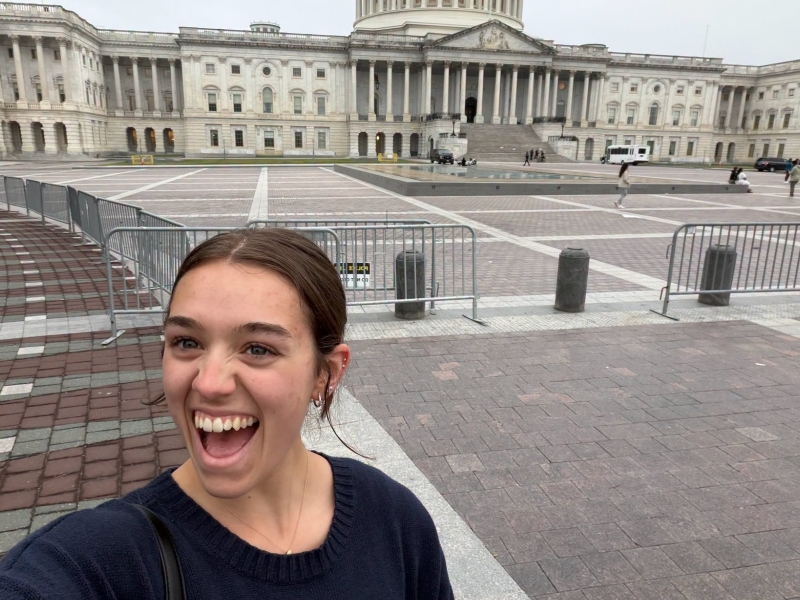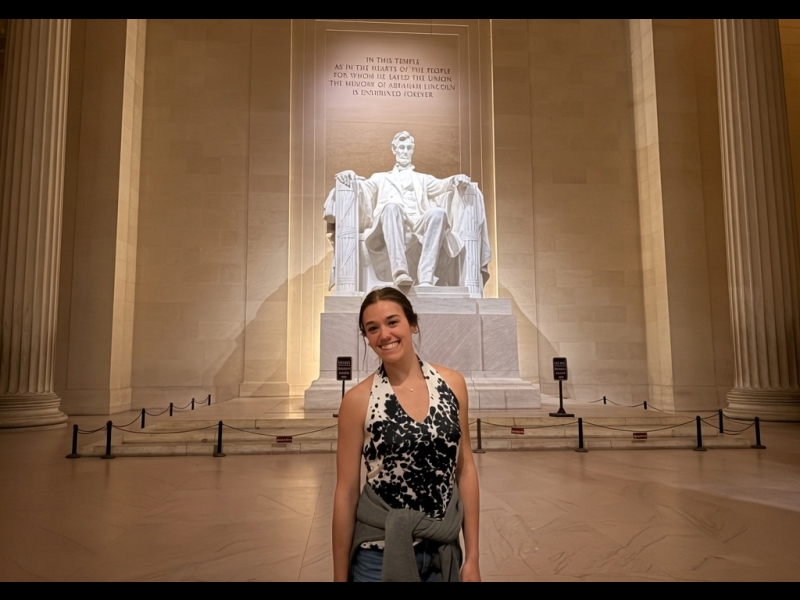
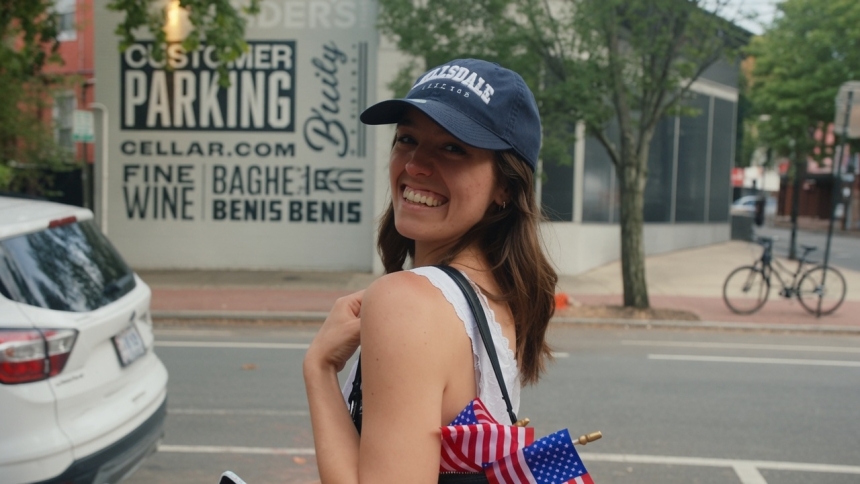
Of the 56 delegates who signed the Declaration of Independence, only one was Catholic. Charles Carroll, a delegate from Maryland, could not practice his faith legally in the colonies. So writes young Catholic, Elaine Kutas, pictured, who is a Senior at Hillsdale College and a summer intern at the National Journalism Center in Washington, D.C. Yet he [Carroll] participated in severing ties with Britain by signing this declaration, the stone dropped in the pool, creating the ripple that would spur the Founding Fathers to draft and sign the Constitution 11 years later. Only then could Carroll finally practice his Catholic faith under the protection of the First Amendment of the Nation he helped create.
Setting aside political affiliation or party lines, America’s 250th birthday is a time of triumph for protected unalienable God-given rights, a time to recognize those who have fought and died for our great nation, and a time of gratitude for the freedoms we hold. Not only does this semiquincentennial anniversary demand recognition of what this country was founded on, but the Catechism of the Catholic Church says, “The love and service of one’s country follow from the duty of gratitude and belong to the order of charity” (CCC 2239). To follow the Catechism, one must live out the virtue of patriotism by showing love and respect for his nation.
My summer internship in Washington D.C. has allowed me to experience the special events and celebrations which have renewed my love of this nation. My Catholic K-12 [Saint Mary, Charlotte, and Lansing Catholic High School] and private college educations have always prioritized American history and reading the primary documents that formed American political and ideological thought, but being on Capitol Hill and seeing those original documents with my own eyes helps me realize that while these are just documents written by men, they are the foundation of a Republic that is only possible because of the trust those men had in one another and — most importantly — in God.
Despite not professing the Catholic faith, the Founding Fathers all recognized the same Lord in Jesus Christ and laid their lives on the line fighting, either physically in the war or by the words they professed, for the freedom to serve him as Lord and live in a free nation. The words in the Pledge of Allegiance, “under God,” were added in 1954 as a reminder of our founding beliefs that have defined our nation since the beginning, and are words we still utter every time we profess allegiance to America.
Seeing the great monuments of our nation, reading the fading signatures on the Declaration of Independence, and cheering for the president of our nation when he comes on stage are moments I am privileged to cherish as I celebrate this nation. But more than that, I am reminded of what my faith demands — a duty to respect and treat America with gratitude for all that those men and women before me have provided so that like Charles Carroll, I may freely practice my faith in Jesus Christ.