Dear Sisters and Brothers in Christ,
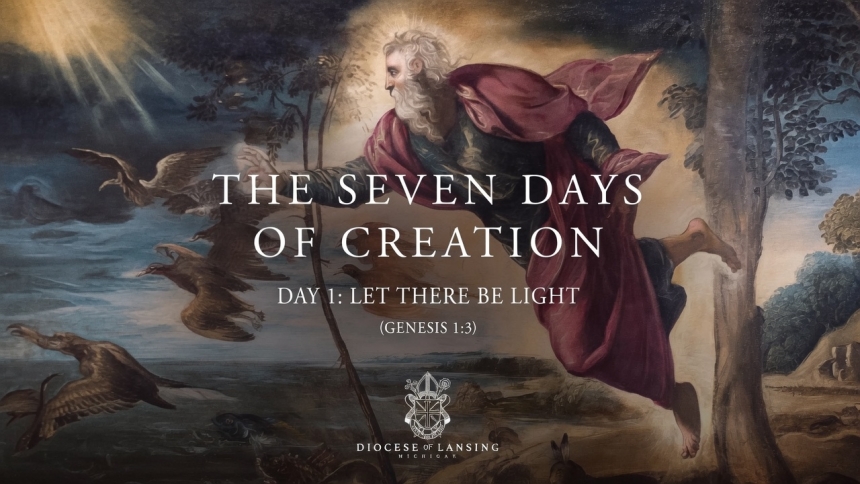
The first chapter of the Book of Genesis details the seven days of creation, one of many rather different accounts of creation in the Old Testament. The late Pope Benedict XVI (1927 – 2022) made it clear that we need not take this text literally. On the other hand, he is also clear that science alone cannot explain everything.
“The Bible does not intend to be a natural science manual; rather, it wishes to make the authentic and profound truth of things understood,” said Pope Benedict during a General Audience at the Vatican in February 2013.
“The fundamental truth that the accounts of Genesis reveal to us is that the world is not a collection of forces that clash with each other; it has its origin and its permanence in the Logos, in God’s eternal Reason which continues to sustain the universe.”
God has made himself know in creation. The Book of Wisdom notes: “For from the greatness and the beauty of created things their original author, by analogy, is seen” (13:5). Paul makes the same point: “Ever since the creation of the world, his invisible attributes of eternal power and divinity have been able to be understood and perceived in what he has made” (Romans 1:20). So, from this text of Genesis let us reflect on the truths which God wants us to grasp regarding Himself and the world around us and within us.
God said! That is how it begins. With a word! Of course, we believe that the Word of God, God’s only Son, is the one through whom God brings us life and all that is good.
In John’s Gospel we read: “In the beginning was the Word and the Word was with God, and the Word was God…. All things came to be through him” (John 1:1, 3). In the Old Testament that Word was often called Wisdom which the Book of Proverbs describes as “playing before him [God] all the while” (8:30). The first gift of the Word of God, of this playing before the Father, is light. Light is always in contrast to darkness. Here we are told that the light is good, not something that is said about the darkness.
Jesus, in John’s Gospel, will often speak of these two realities. He declared himself: “I am the light of the world. Whoever follows me will not walk in darkness, but will have the light of life” (John 8:12). Light draws us, calls to us, summons us.
That is the whole purpose of creation, to bring us to God by means of his light.The big bang led to much light but as our universe ages there is also much darkness. Yet, in this vast universe, there is an order, not one devised by itself but built into it. That is a light which triumphs over any darkness.
Toward the end of the Book of Job, God replies to Job’s insistent challenges. Fundamentally, God tells Job that he is God and Job is not. To get there, however, he asks, “Where were you when I founded the earth?” (38:4) Of course, no one of us was around at the beginning. Yet the order and reason so clearly present in our expanding cosmos points to the only One who can provide that—God himself, the true light of reason.
Sisters and brothers, since our world is reasonable, we are able to plumb its depths. It is not a random mass of chaotic forces filled with internal contradictions. We have been given the great gift of our intelligence to see the order present in our world. Our scientific efforts have yielded great insight. But the true light must lead us ever beyond what is limited to our eyes to see for there we will find the ultimate good.
Sincerely yours in Christ,
+ Earl Boyea
Bishop of Lansing