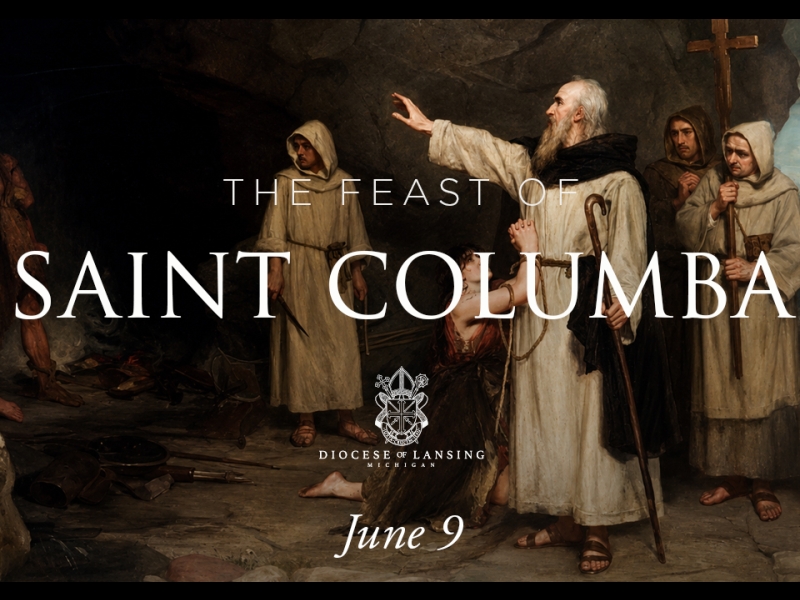
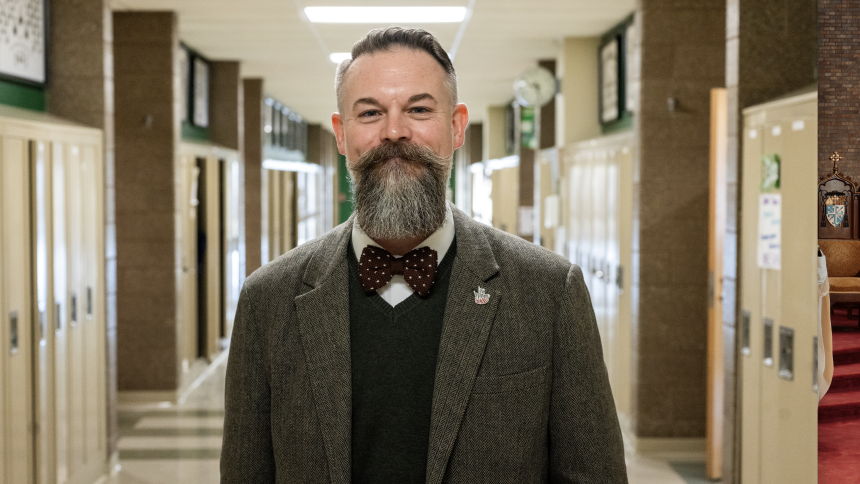
Today is the Feast of Saint Columba, also known as Colum Cille, meaning “Dove of the Church” in Gaelic, explains Brian Garred, pictured, who teaches United States History and Law at Father Gabriel Richard High School in Ann Arbor.
Saint Columba was a sixth century Irish monk, missionary, and scholar. He was a man of great stature and strong personality; however, he had an enduring faith and a commitment to peace. He is one of Ireland’s three patron saints, along with Saint Patrick and Saint Brigid. Saint Columba was a pivotal figure in the evangelization of Christianity in Scotland. Through his life and mission, he emphasized humility, study, and intense personal prayer.
Columba was born in 521, descending from Irish royalty in Gartán, which is today County Donegal, Ireland. In his early youth, he was mentored by a priest, who would eventually baptize him into the Church. Columba then went on to attend a monastic school, in which his life as a monk began, and later, his ordination to the diaconate occurred. As a deacon, he would eventually study at another monastery run by Saint Finnian of Clonard. During this period, Columba was ordained as a priest, along with eleven others from this monastery. They were eventually to be known as the “Twelve Apostles of Ireland”.
In 563, Columba left Ireland for Scotland. By some accounts, it is believed his departure was attributed to his desire to preach the word of God. Others claim he left because of his involvement in a battle of warring tribes, before repenting and taking on missionary work as a penance. Columba later settled on the Scottish island of Iona, where he established a monastery. His abbey would become a vital location for missionary work in Scotland, as well as a center of literacy. Columba was himself an avid scribe and accomplished poet. The abbey on Iona would become the initial birthplace of the Book of Kells as well.
Saint Columba was also instrumental in the conversion of the Picts in northern Scotland. This evangelization began by his gaining entrance to the castle of King Bridei I, where the locked gates miraculously opened when he made the Sign of the Cross. The king then welcomed Columba, believed the Gospel, and was baptized. Columba would encounter some resistance when converting pagans, but found remarkable success in spreading the Catholic faith in Scotland for the remainder of his life. He died in 597 on the date he predicted his death would occur. He entered into eternal life in the sanctuary of his abbey’s church.
Saint Columba believed the balance of life contained three daily pillars: prayer, physical work, and study. His dedication to these pillars provides us with inspiration to balance our prayer lives, work lives, and studies. Saint Columba calls on us to trust God as a guide in our Faith journeys. This spiritual guidance is described ever so eloquently in the prayer attributed to the Saint himself:
“Be Thou a bright flame before me, Be Thou a guiding star above me, Be Thou a smooth path before me, Be Thou a kindly shepherd behind me, Today, Tonight, and Forevermore.”
Saint Columba, pray for us!