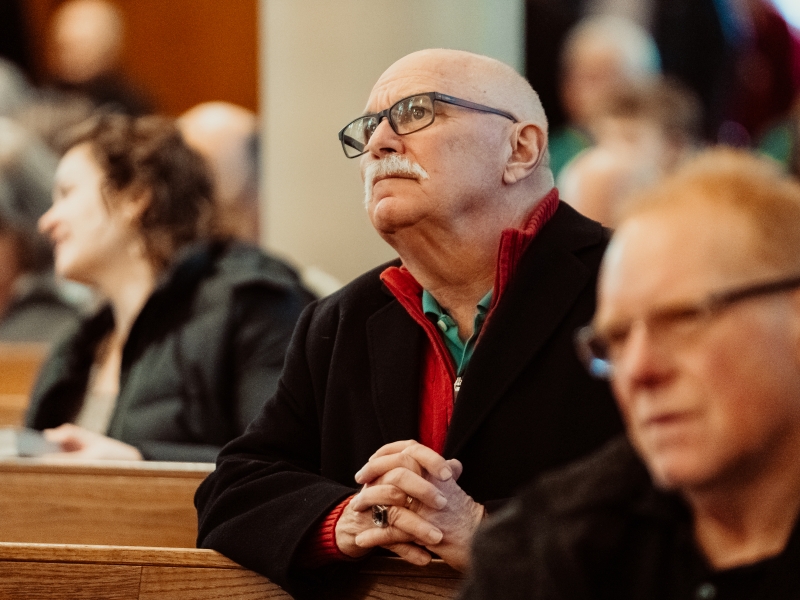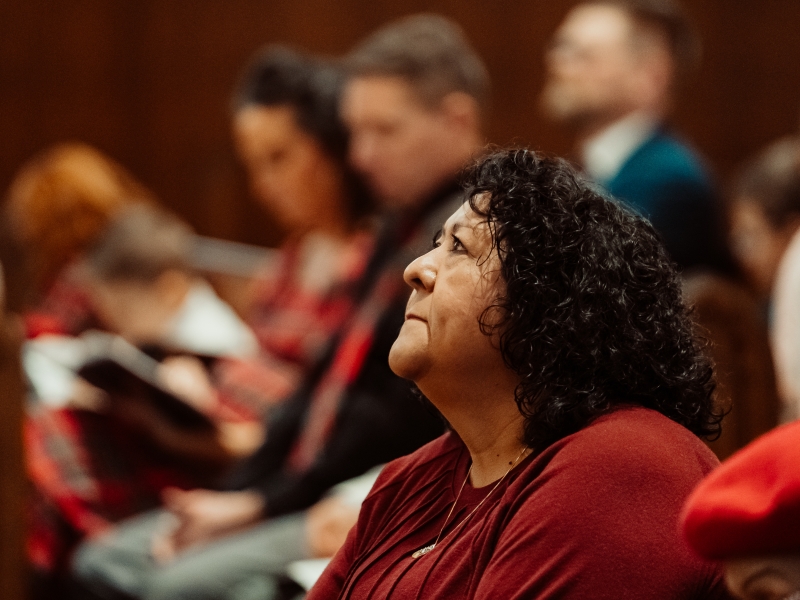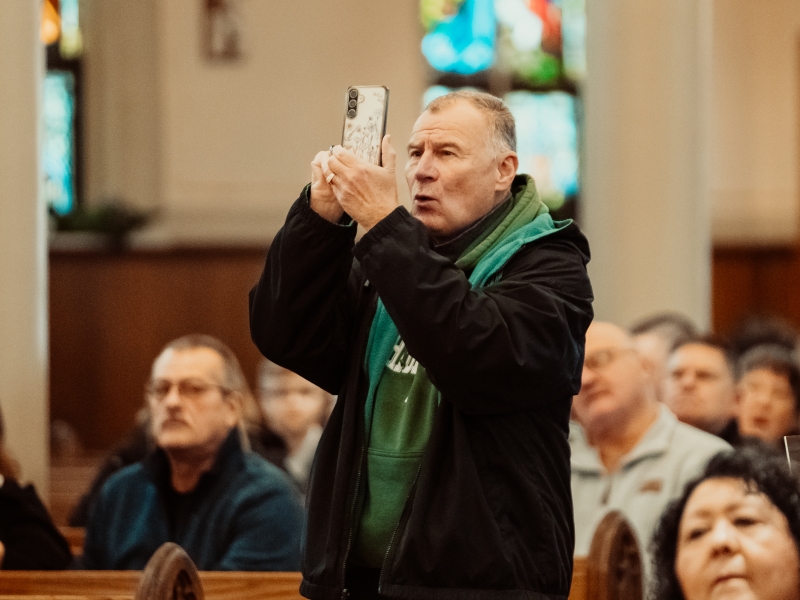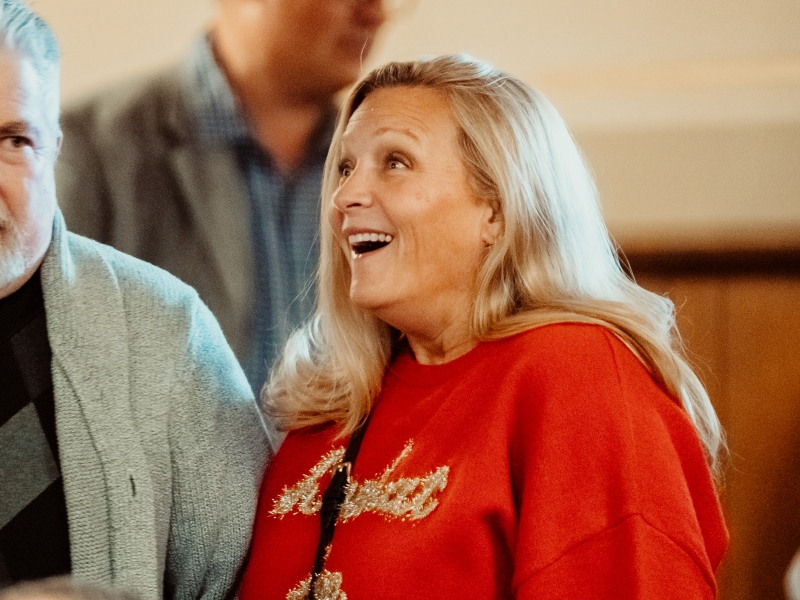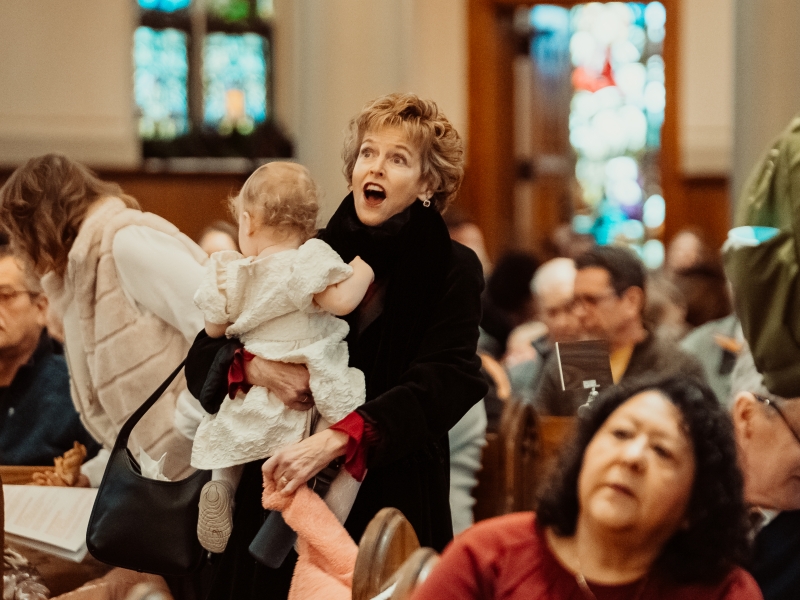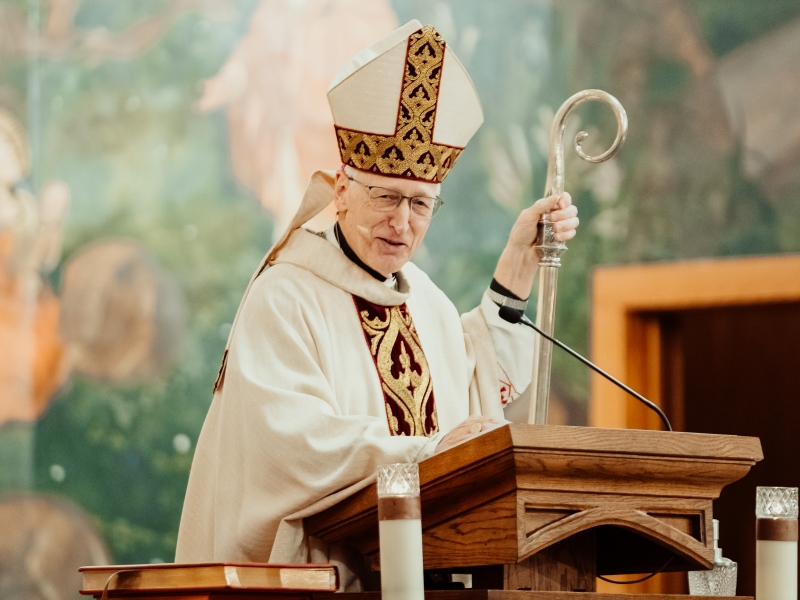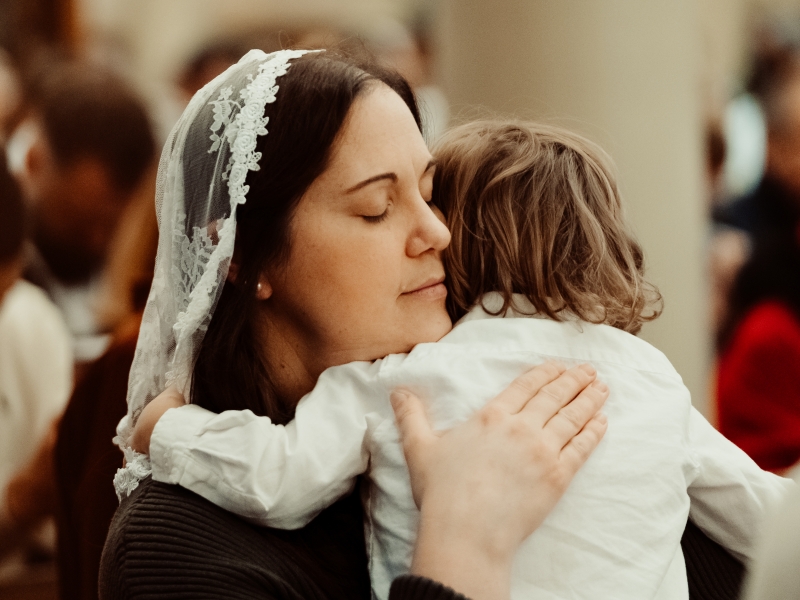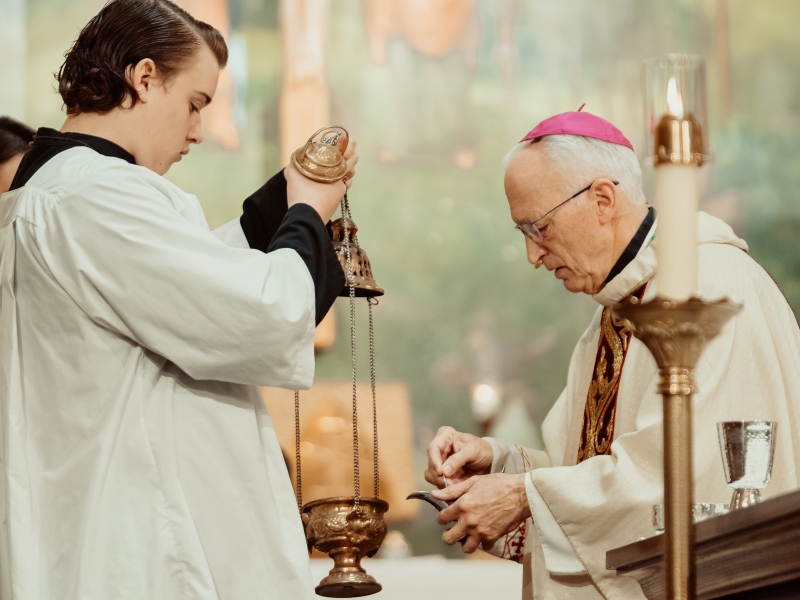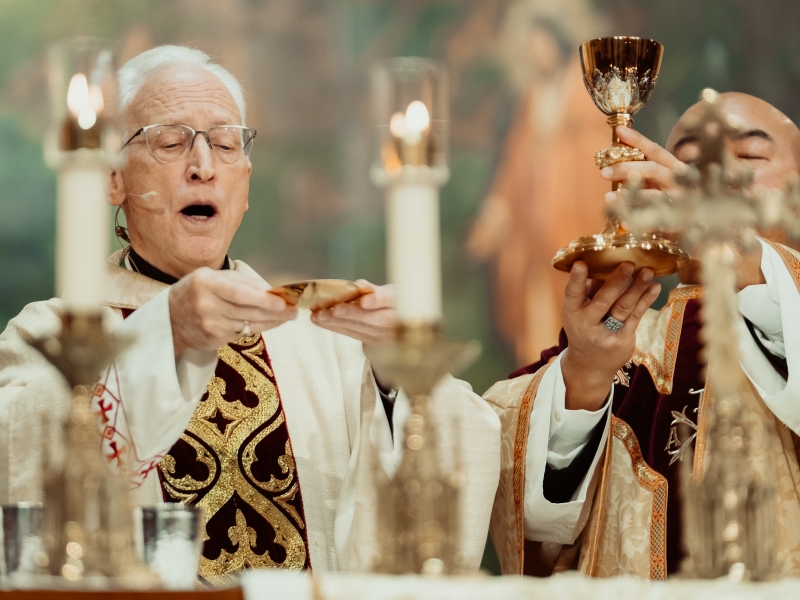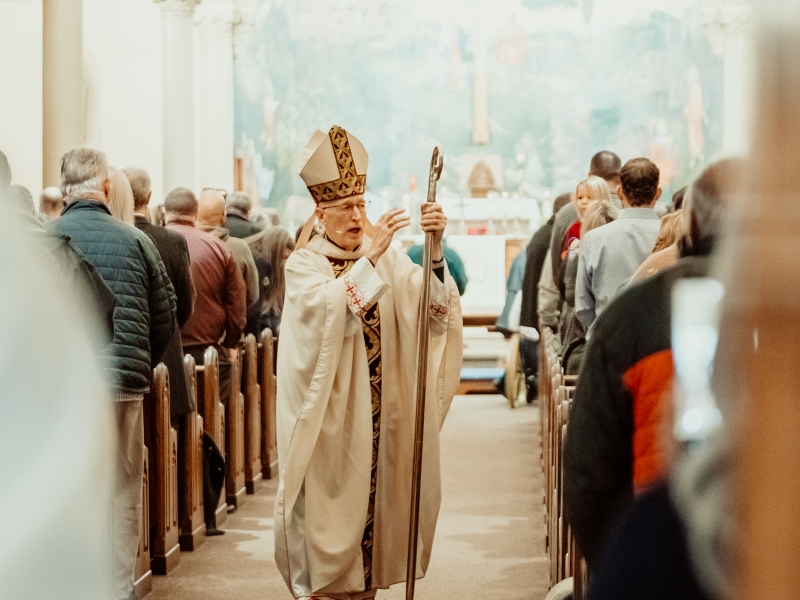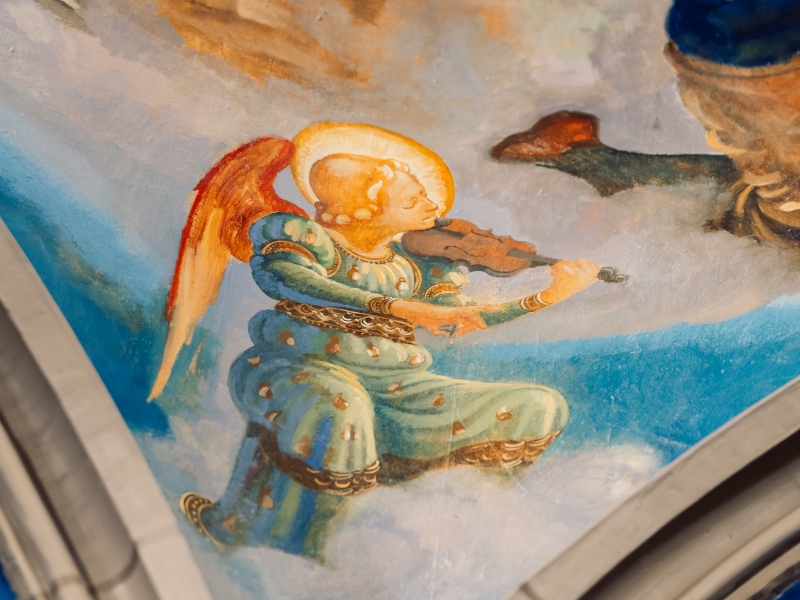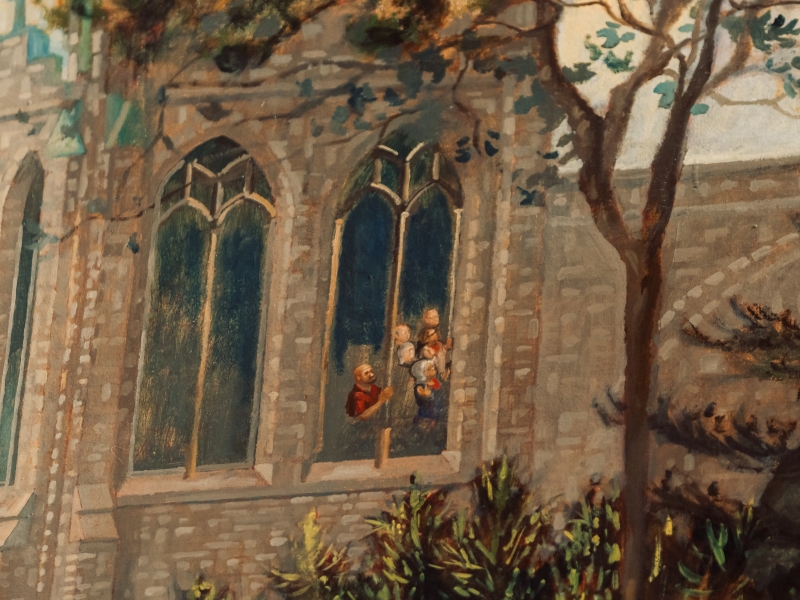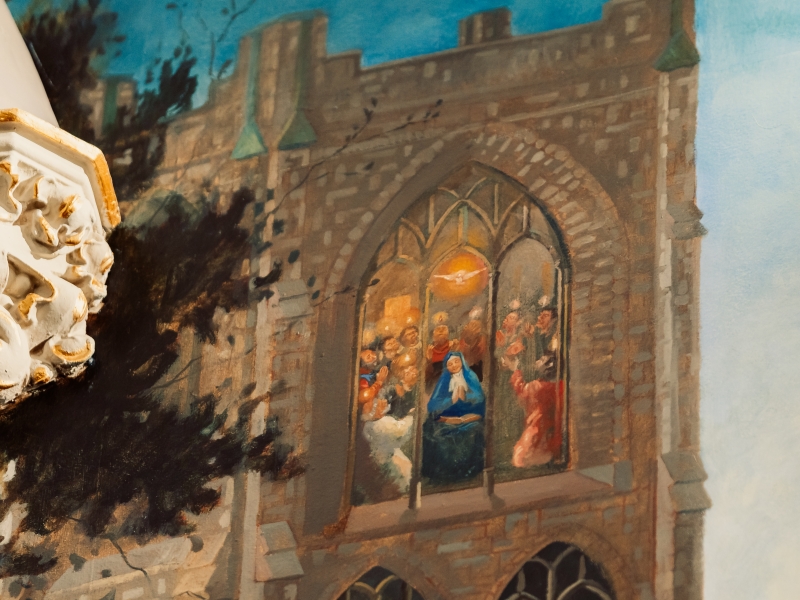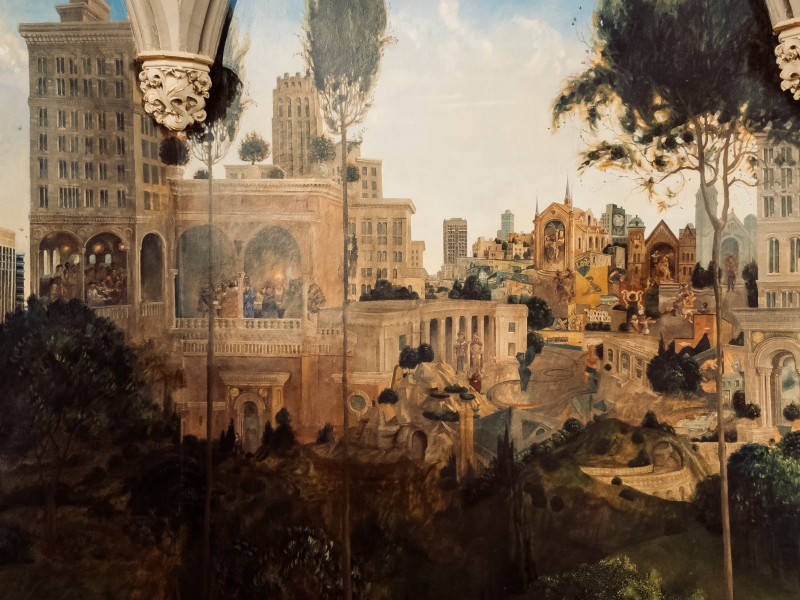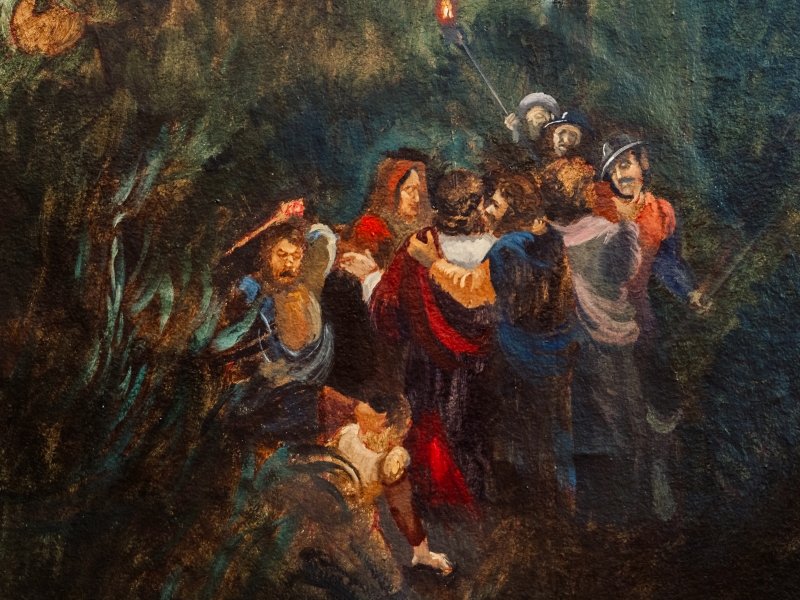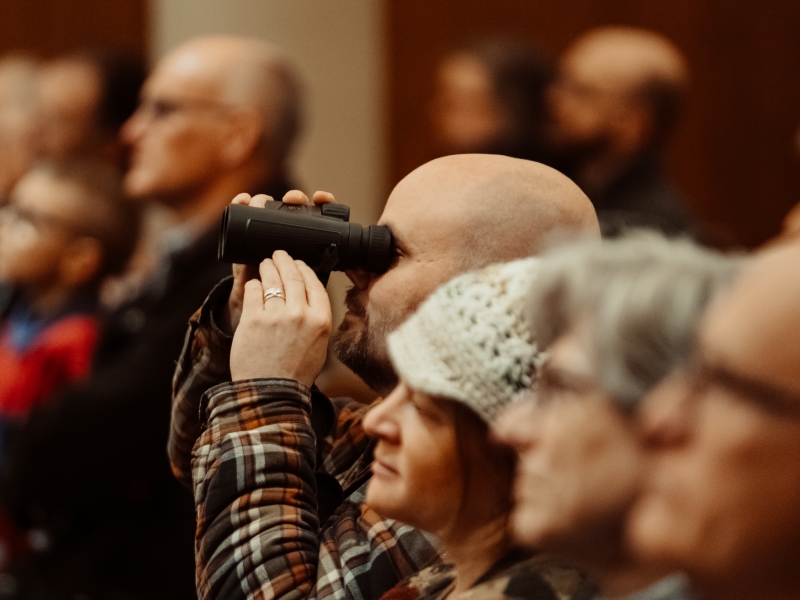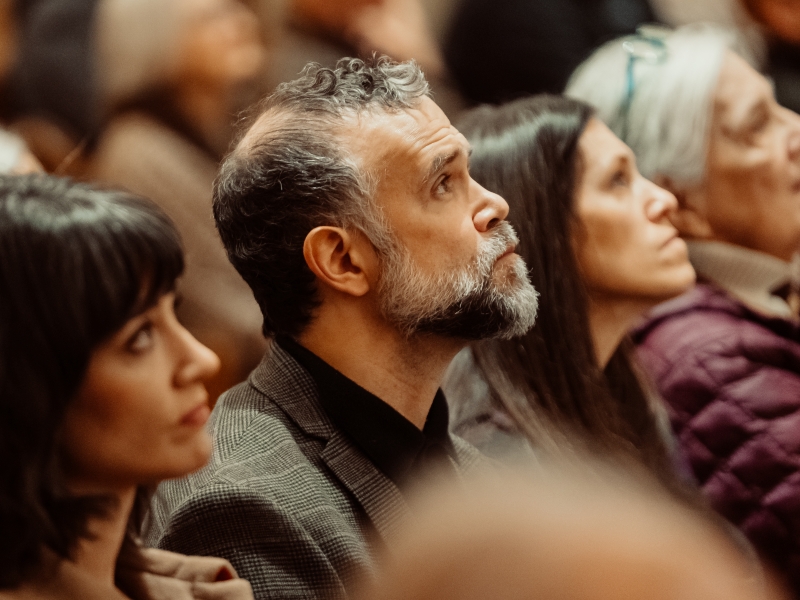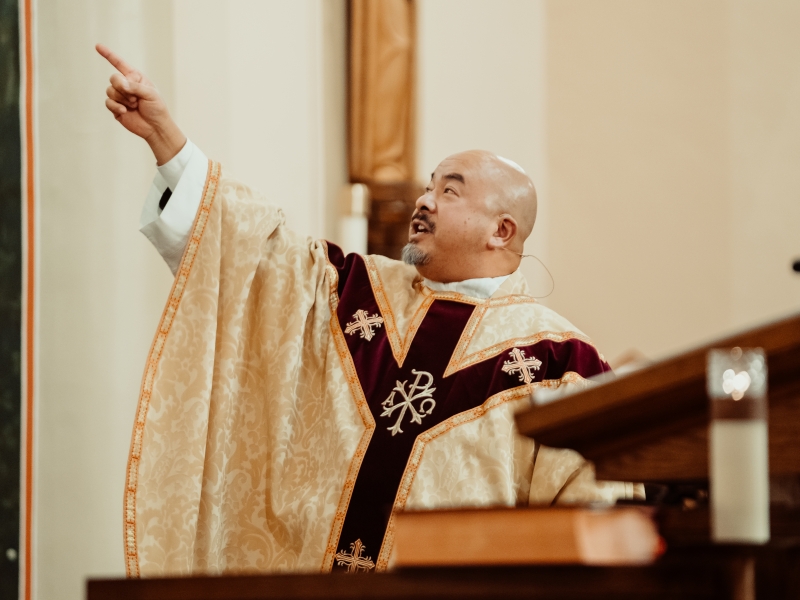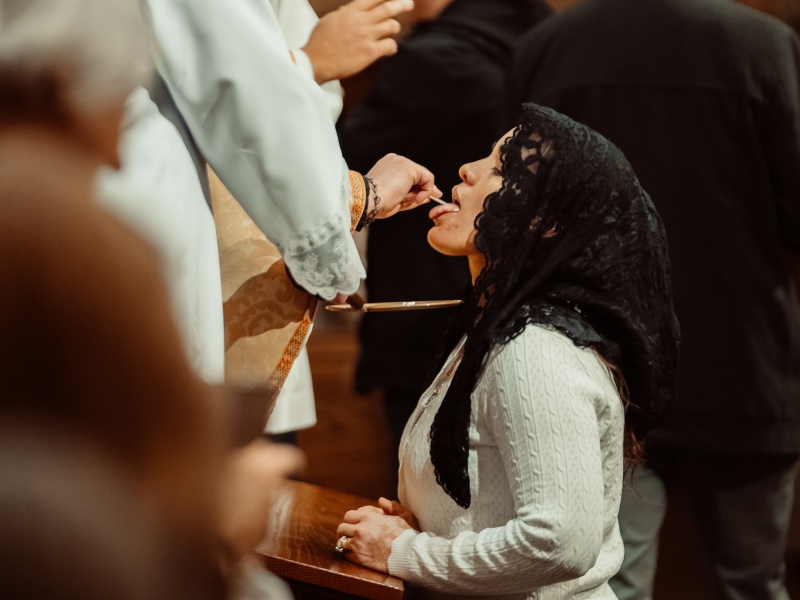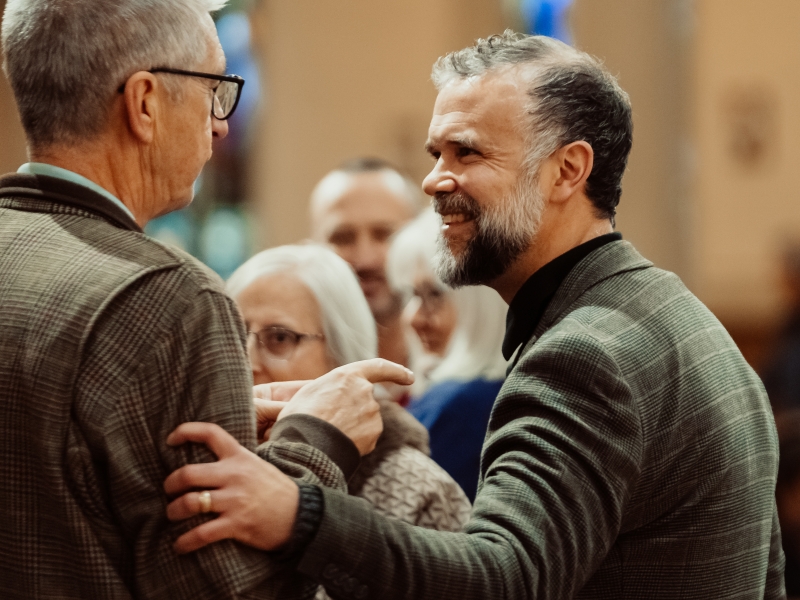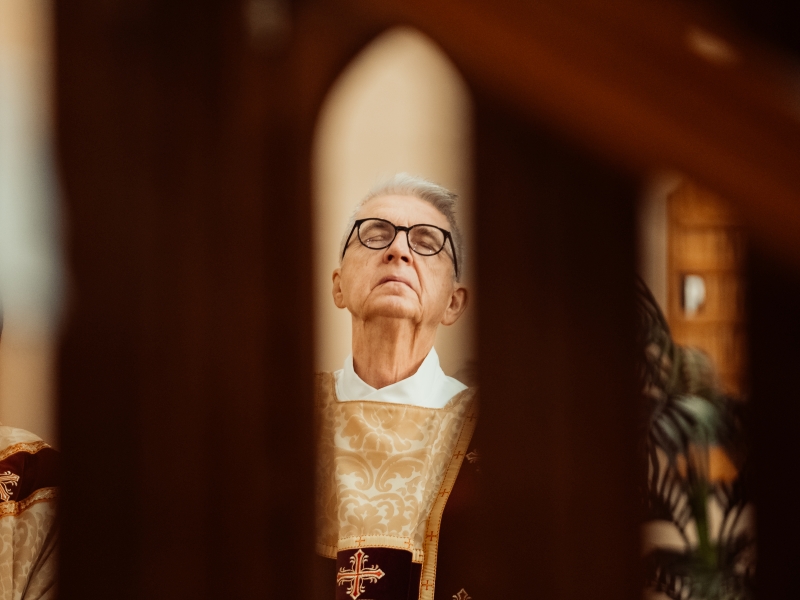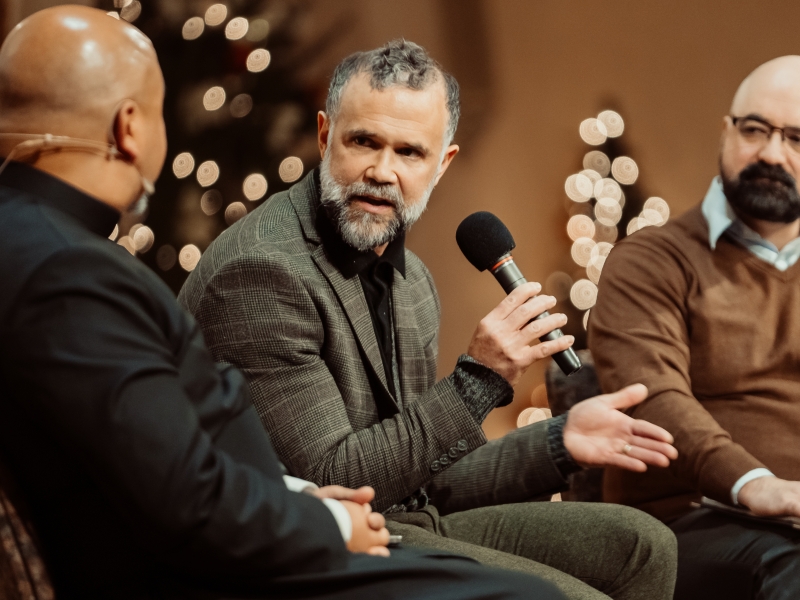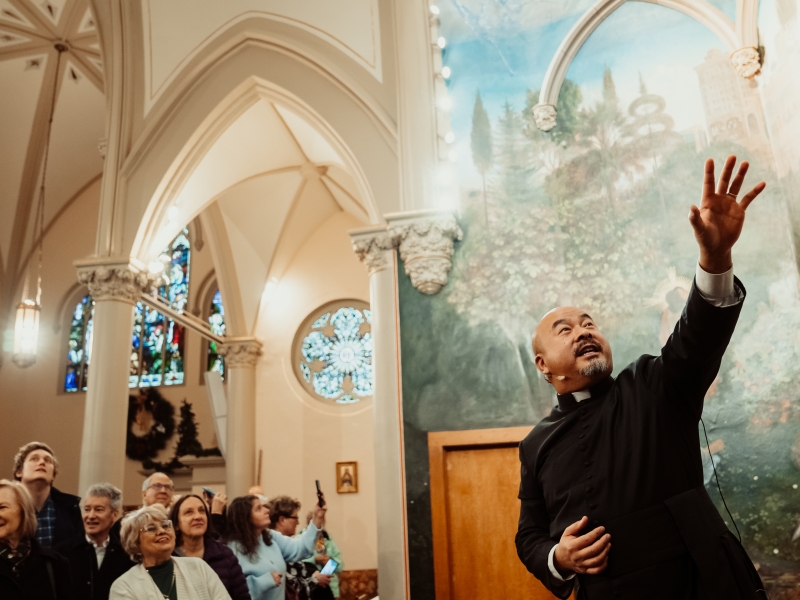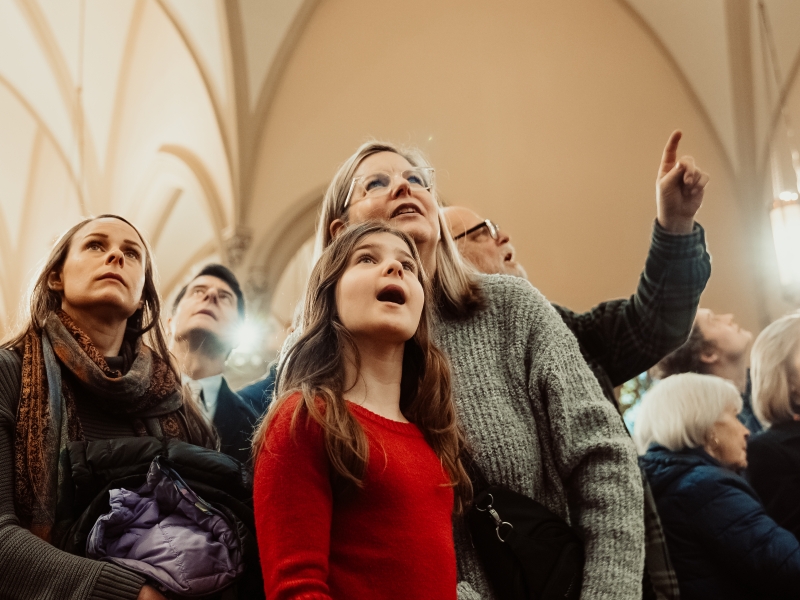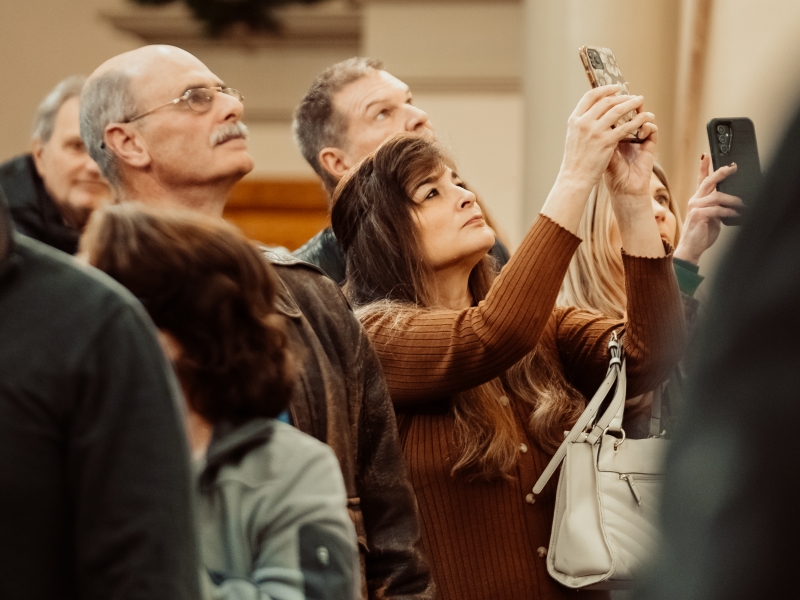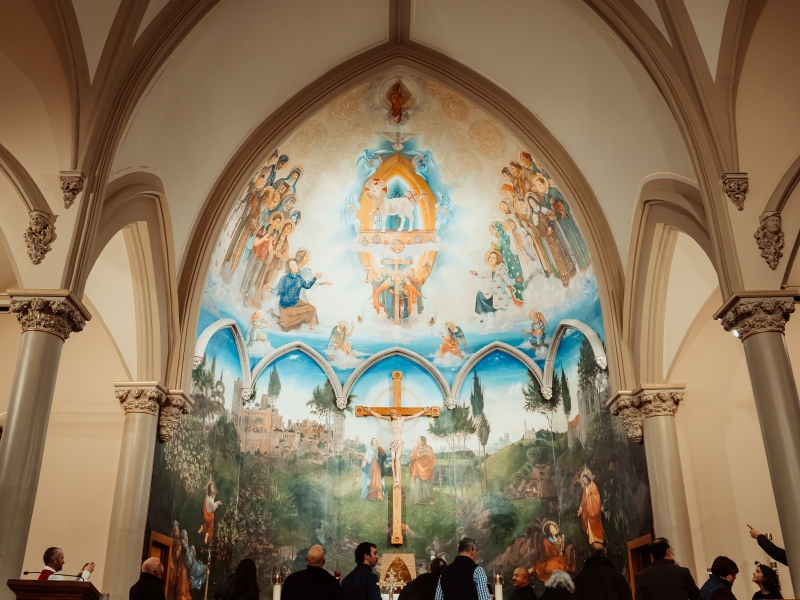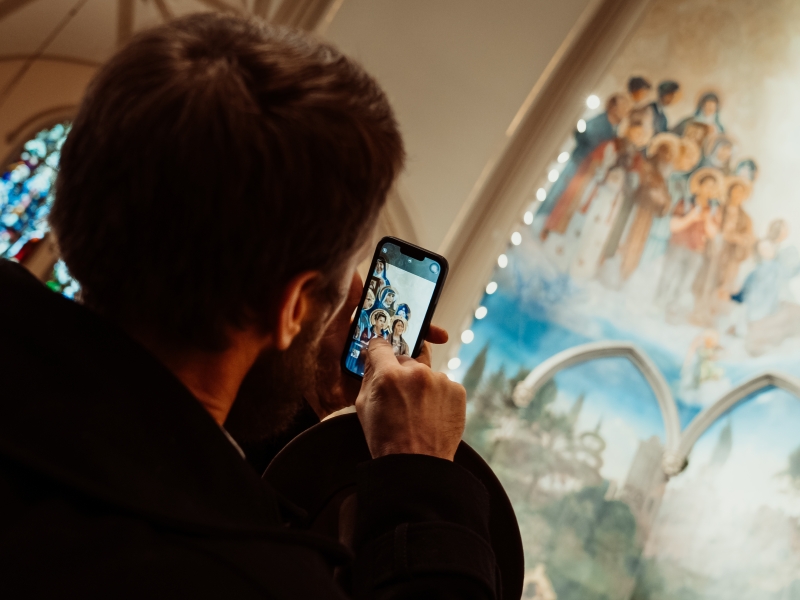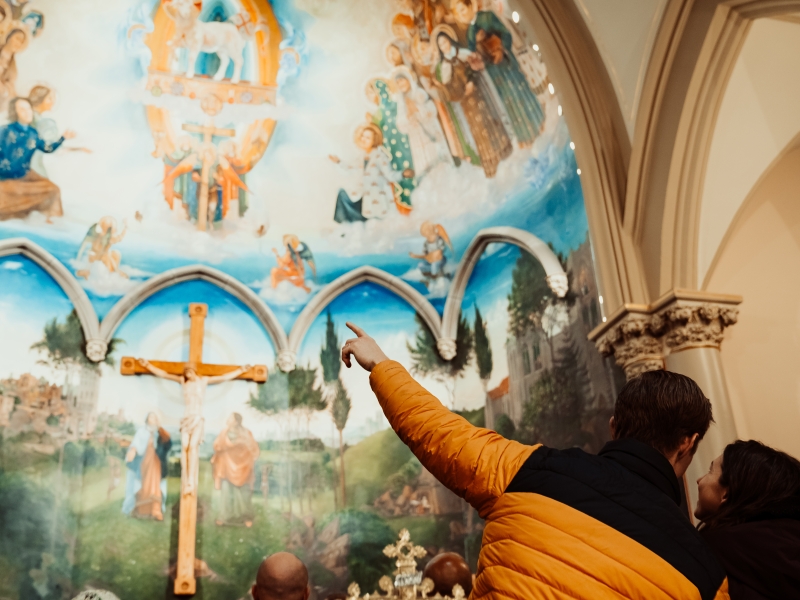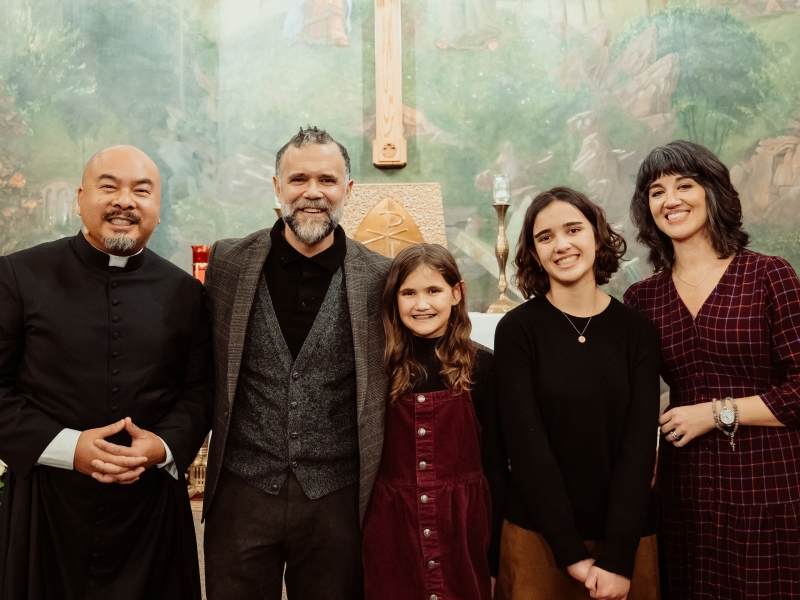
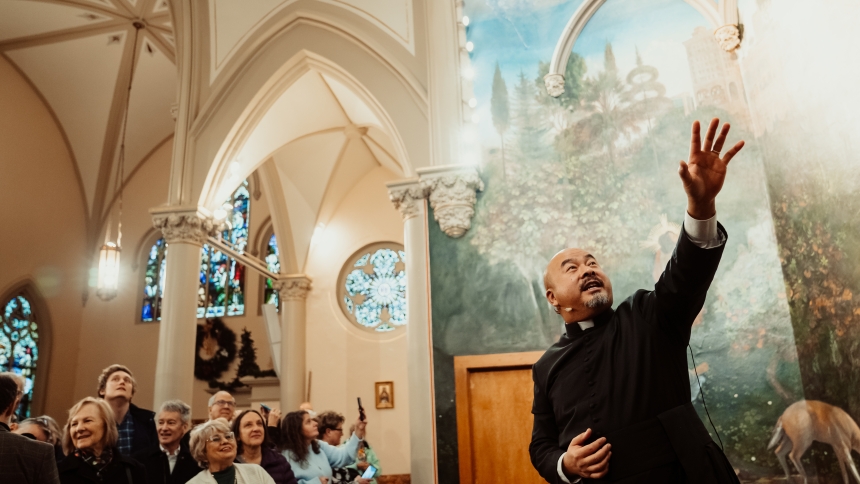
It’s been a momentous week at Saint John the Evangelist parish in Jackson as you can tell from these stunning photographs below. The images capture the unveiling of a new mural on the church’s apse upon Christmas Eve, December 24, in the presence of Bishop Earl Boyea. Then upon the patronal feast of Saint John the Evangelist, December 27, pilgrims came from far and wide to attend Holy Mass followed by a Q&A with the creator of the mural, local artist Joe Macklin. Read below as pastor, Father Chas Canoy, pictured above, explains the meaning behind “Macklin’s masterpiece”. Father Canoy writes:
This Christmas of 2025 is extra special not only because it is a Jubilee Year, but also because Christmas Eve marks the unveiling of the yearlong painting of “Macklin’s Masterpiece” in the apse. The apse is the semicircular recess at the back of our church’s sanctuary, which contains the altar of the Blessed Sacrament.
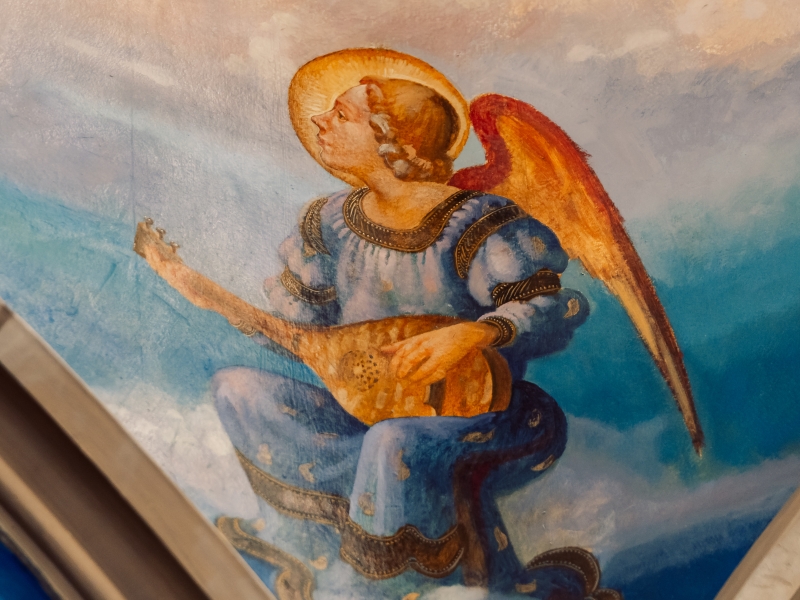
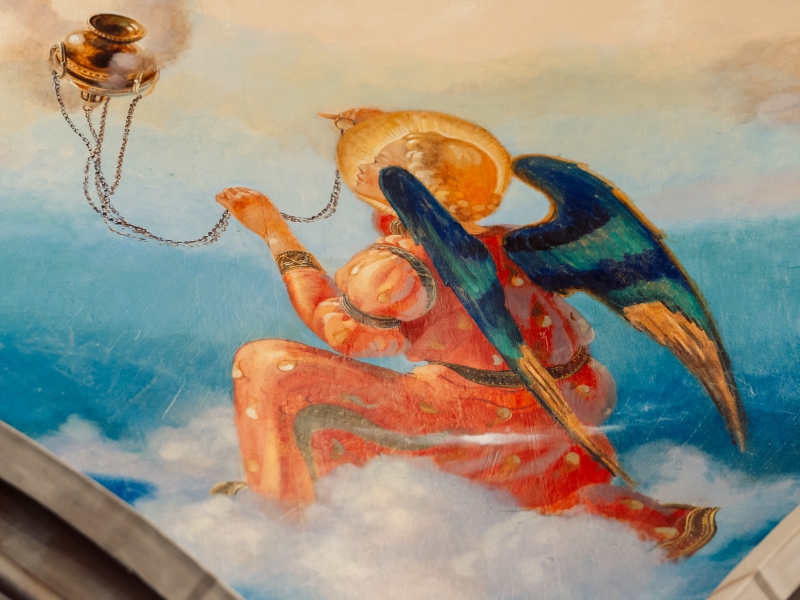
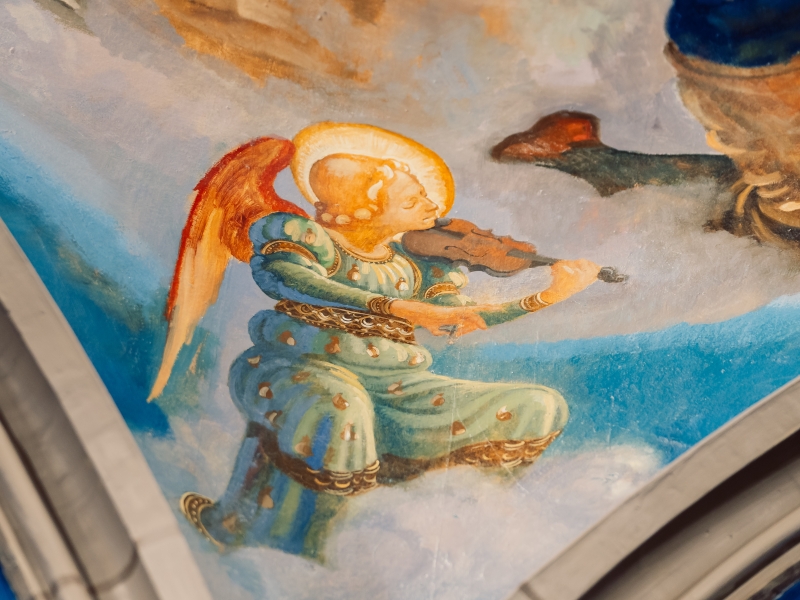
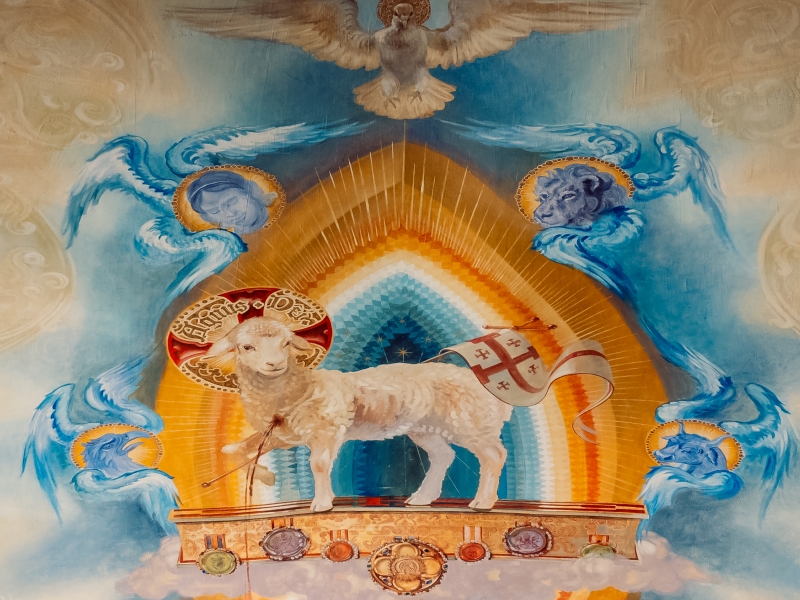
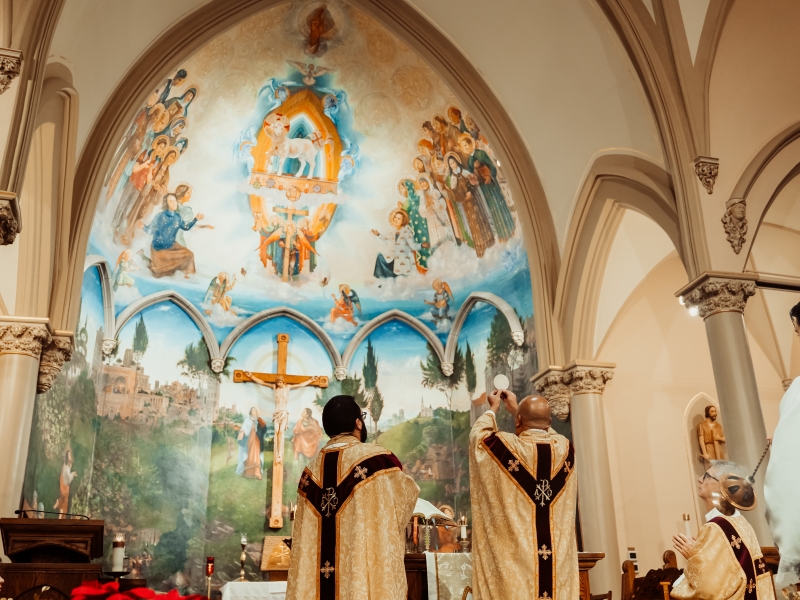
Since January, Joseph Macklin has worked full-time on the four levels of scaffolding behind a 32-foot high curtain to create a grand and exquisite piece of sacred art. Our hope is that this work draws the faithful more deeply into the sacred liturgy because these two subjects portrayed in the apse reveal what is actually going on in the Mass. The subject of the upper part of the apse is The Wedding Feast of the Lamb, and the subject of the lower part of the apse is The Paschal Mystery.
The Wedding Feast of the Lamb:
The last book of the Bible, the Book of Revelation, depicts heaven as the wedding feast of the Lamb. “Alleluia! For the Lord our God the Almighty reigns. Let us rejoice and be glad and give him glory. For the wedding day of the Lamb has come, and his Bride has made herself ready” (Rev. 19:6-7).
That Bride, St. Paul states, is the Church: “‘Therefore a man shall leave his father and mother and be joined to his wife, and the two shall become one flesh.’ This mystery is profound, and I am saying that it refers to Christ and the Church” (Eph 5:31-32). That happens to each of us through the Eucharist; we the Church become one flesh with the Bridegroom.
The Church is not a building, but God’s holy people, the saints! St. John describes in his heavenly vision: “I had a vision of a great multitude, which no one could count, from every nation, race, people, and tongue. They stood before the throne and before the Lamb…. They cried out in a loud voice: ‘Salvation comes from our God, who is seated on the throne, and from the Lamb’” (Rev. 7:9-10).
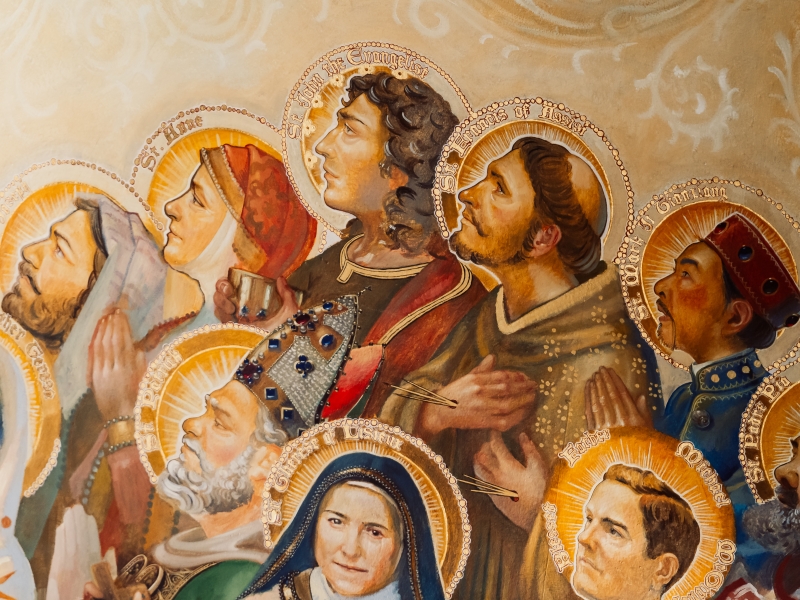
In Joseph’s painting, he has 24 saints representing the Church, that great multitude from every nation, race, people, and tongue, of whom the prophet Isaiah foretold: “As a bridegroom rejoices in his bride, so shall your God rejoice in you.” We ask that all of these saints intercede for the evangelization of Jackson and for the well-being of our family and friends both now and for eternity!
The selection of the 24 Saints at the Wedding Feast:
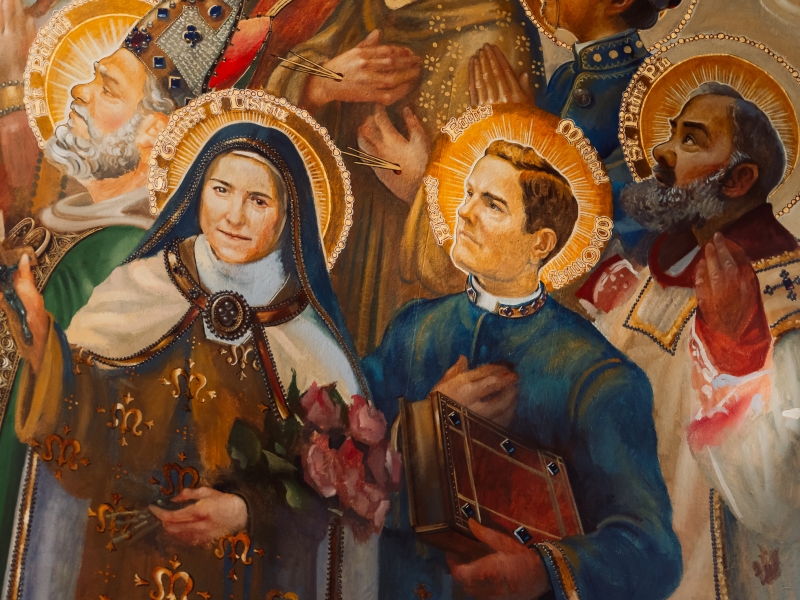
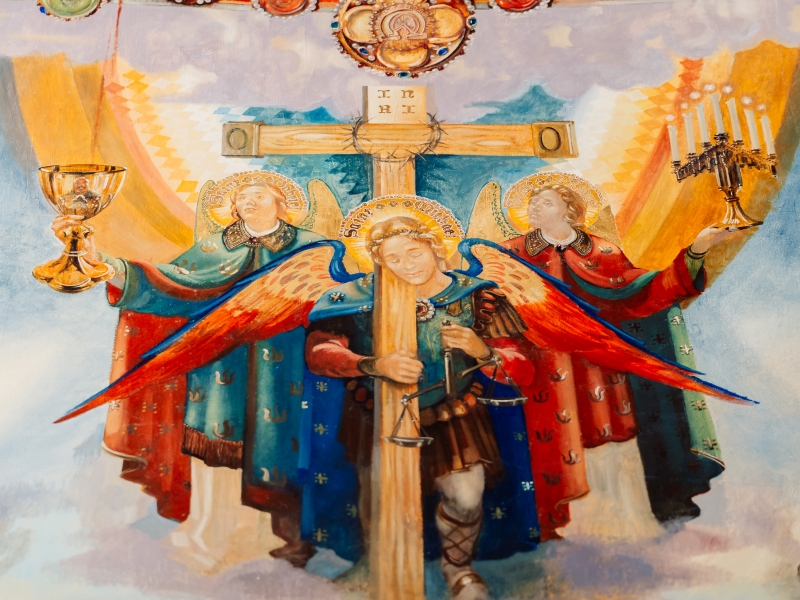
The 24 saints depicted in the upper apse were largely determined by our parishioners, who had the opportunity one Sunday to write down their favorite saints. Twenty-seven saints received seven votes or more. Twenty of those top twenty-seven favorites were chosen. St. Michael got a whopping 40 votes, but since he was already depicted in Joseph’s work as an archangel, we were able to add another saint. Here are the 24 saints:
St. John the Evangelist was the second most popular with 37 votes.
See if you can recognize these other favorite saints in Joseph’s painting (listed in order of most votes): St. Francis of Assisi, Bl. Solanus Casey, St. Mother Teresa, St. John Paul the Great, St. Padre Pio, St. Therese of Lisieux, St. Joseph, St. Patrick, St. Joan of Arc, St. Anne, St; Mary, St. Maximilian Kolbe, St. Fautina, St. Elizabeth Ann Seton, Bl. Carlo Acutis, St. Kateri Tekakwitha, and Bl. Michael J. McGivney.
The remaining saints were chosen because they were: 1) more representative of the fact that the saints came from “every nation, race, people, and tongue” and/or 2) patron saints whom the faithful invoke to intercede for the great afflictions of our time: St. Gianna Beretta Molla (abortion), St. Josephine Bakhita (human trafficking), and St. Mark Ji Tianxiang (addiction).
St. Isaac Jogues is also depicted, in honor of the 17th century North American Martyrs who were among the French Jesuits who first brought the Gospel to the land that would become the state of Michigan.
Finally, you’ll also notice Servant of God Michelle Duppong, whose cause for beatification is still underway (and thus the only one without a halo). This wonderful model for young people, who died of cancer at the age of 31 on Christmas Day in 2015, was an American Catholic laywoman who served as a Focus missionary to college students and as a Director of Faith Formation.
The Paschal Mystery:
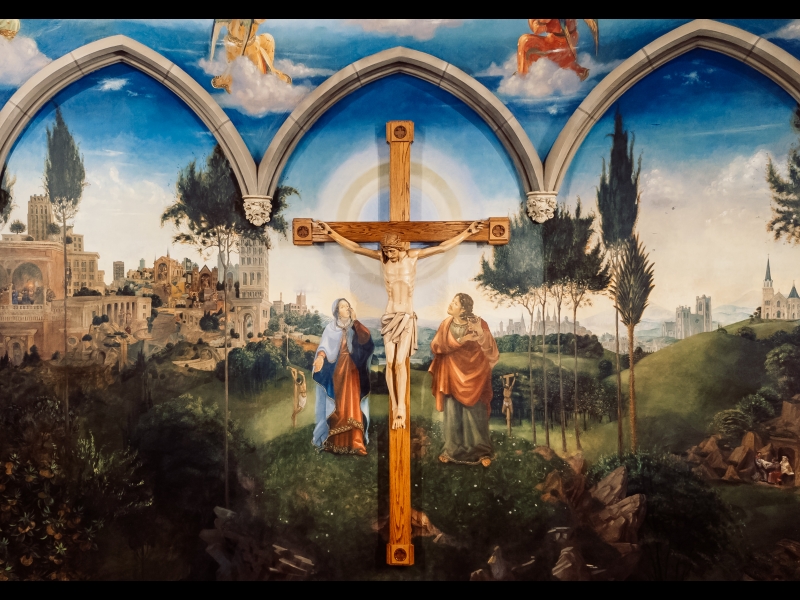
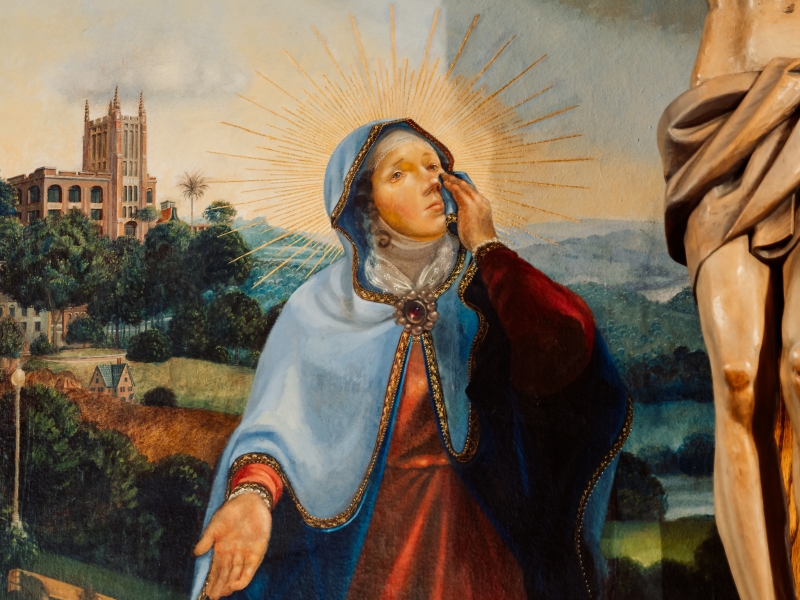
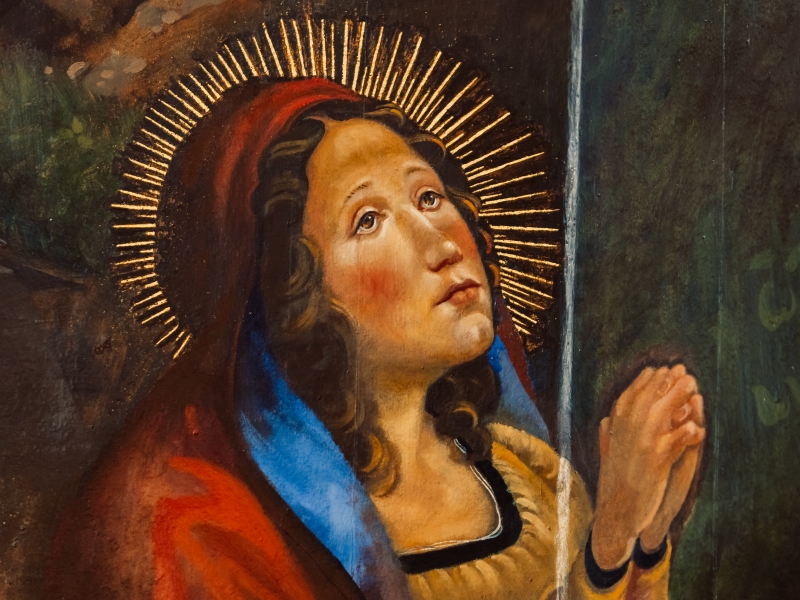
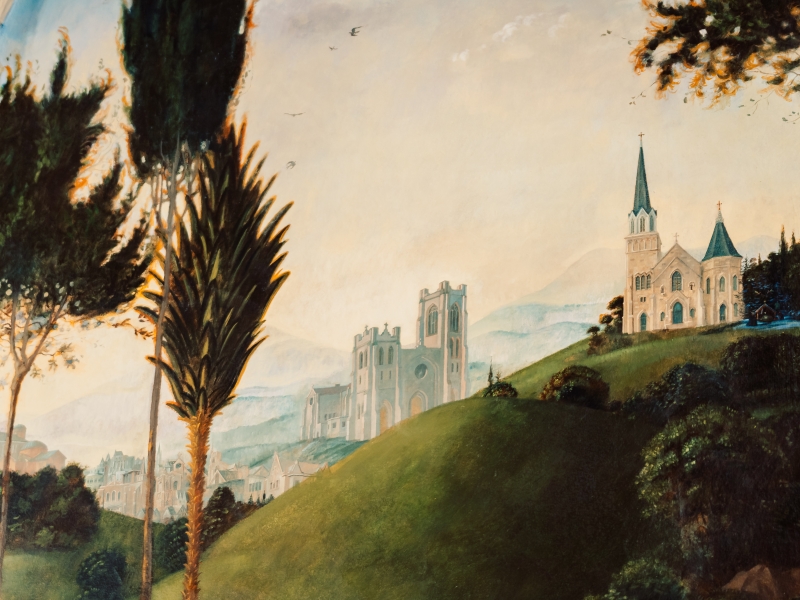
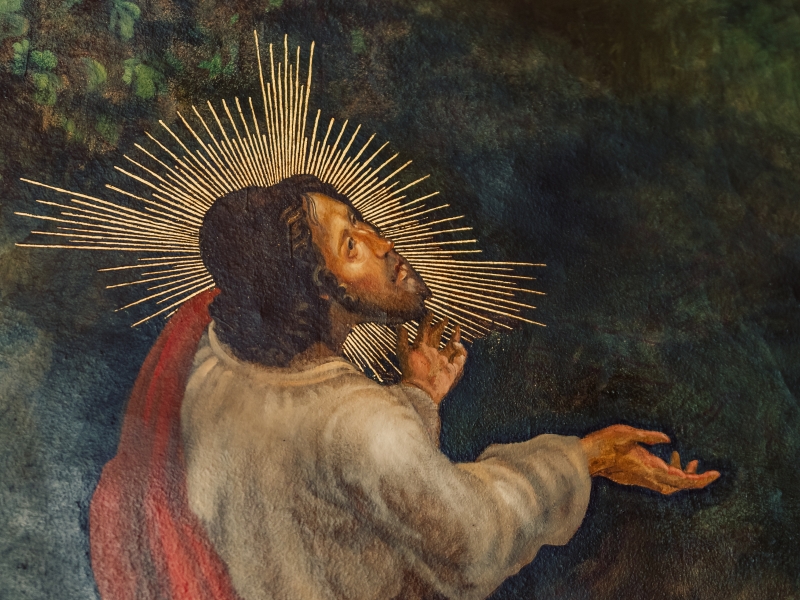
The lower part of the apse depicts The Paschal Mystery, which simply refers to the passion, death, and resurrection of our Lord Jesus Christ. And so, Joseph painted from left to right these mysteries of the Easter Triduum on the lower part of the apse: 1) the events of Holy Thursday on the left, which depicts the Agony in the Garden in the foreground and the Last Supper in the distance, 2) Good Friday in the center, which features Jesus’ crucifixion with Mother Mary and St. John at the foot of the cross, and 3) the Resurrection of Easter on the right with Jesus dressed as a gardener appearing to St. Mary Magdalene. These sacred mysteries together make up the Paschal Mystery, which is truly made present to us at Holy Mass!
How Macklin’s Masterpiece Aids Us in Our Worship of God:
Holy Mass allows us to enter into something much bigger and more profound than gathering to sing some songs and listen to a sermon, as edifying and Spirit-filled that may be. The Divine Liturgy is an actual participation in the mysteries of salvation, by which the eternal dimension of the Wedding Feast of the Lamb and, at the same time, the historical dimension of the Paschal Mystery are made present to us in real time!
Joseph’s sacred art is meant to make us more palpably aware of these supernatural realities to which we are joined when we celebrate Mass. In the Liturgy of the Eucharist, we are brought to Golgotha on Good Friday and simultaneously before the heavenly throne and marriage chamber of the Lamb in heaven! We join Mother Mary and St. John at the foot of the cross and concurrently join the angels and saints in heaven in adoration of the Lamb of God. Holy Mass is the portal by which heaven and earth meet. We hope Macklin’s Masterpiece makes you more keenly conscious of that mystical reality.
A HUGE THANK YOU to all our parishioners and other benefactors who contributed to the Capital Expenditures Fund to make this happen! Your continued support will allow us to continue onto Phase 2, which will give the sanctuary new flooring and create reredos to frame the high altar and complement the apse mural! By the way, Joseph depicts even the Christmas mystery, as there is a very small Nativity scene right beside his painting of St. John Church in the right half of the lower apse! A most blessed Christmas to you and your kin!
* Photographs by Valerie Hendrickson
* To know more about the parish of Saint John the Evangelist go to: https://saintjohnjackson.org/